Why Anxiety Is Worse at Night—& What to Do When You Can’t Sleep

Many people notice that their anxiety ramps up at night. This can look like feeling restless while trying to fall asleep or racing thoughts. With fewer distractions and more quiet, anxiety simply becomes more noticeable when you are trying to fall asleep.
Nighttime anxiety can be especially frustrating because it interferes with sleep. Difficulty sleeping due to anxiety can significantly impact mental health, physical well-being, and emotional regulation. Over time, poor sleep and anxiety can create a cycle that makes both feel harder to manage.
Why Anxiety Feels Worse at Night
Many people experience anxiety, but for some people it feels worse at night or only shows up after dark. This can be confusing, especially when anxiety feels more manageable during the day. There are several common reasons why anxiety tends to intensify at night.
Your brain has fewer distractions
At night, when you are trying to fall asleep, there is much less external stimulation to focus on. You are no longer occupied with work tasks, homework, conversations, or watching television. Most people sleep in a quiet, mostly dark room, sometimes with gentle ambient noise. These are healthy sleep habits, but they also reduce the distractions that are present during the day.
Anxiety that exists during the daytime is no longer buffered by noise, activity, or environmental stimulation. With fewer distractions, your brain has more space to focus on worries and fears that may have been easier to tune out during the day. This is sometimes why anxiety often feels more intense at night, even if its overall level has not actually increased.
Emotional regulation is lower at night
Most of us start the morning with a full “battery” of energy and mental capacity. By the end of the day, our ability to cope with stress and anxiety has decreased. For people with burnout or ADHD, this effect can be even stronger. Much of the day’s energy may go toward managing stressors and completing daily tasks. When energy is low, regulating emotions becomes harder. This is one reason anxiety often feels worse at night.
Your body sensations feel more intense
The quiet and stillness of trying to fall asleep often make us more in tune with our body. We notice our heartbeat, breathing patterns, and stomach sensations more clearly. Our brains can sometimes misinterpret these normal bodily signals as signs of anxiety. When this happens, your nervous system may become more activated, preparing for a perceived threat instead of rest. This misreading can make it harder to relax and fall asleep.
Why Trying to “Force Sleep” Backfires
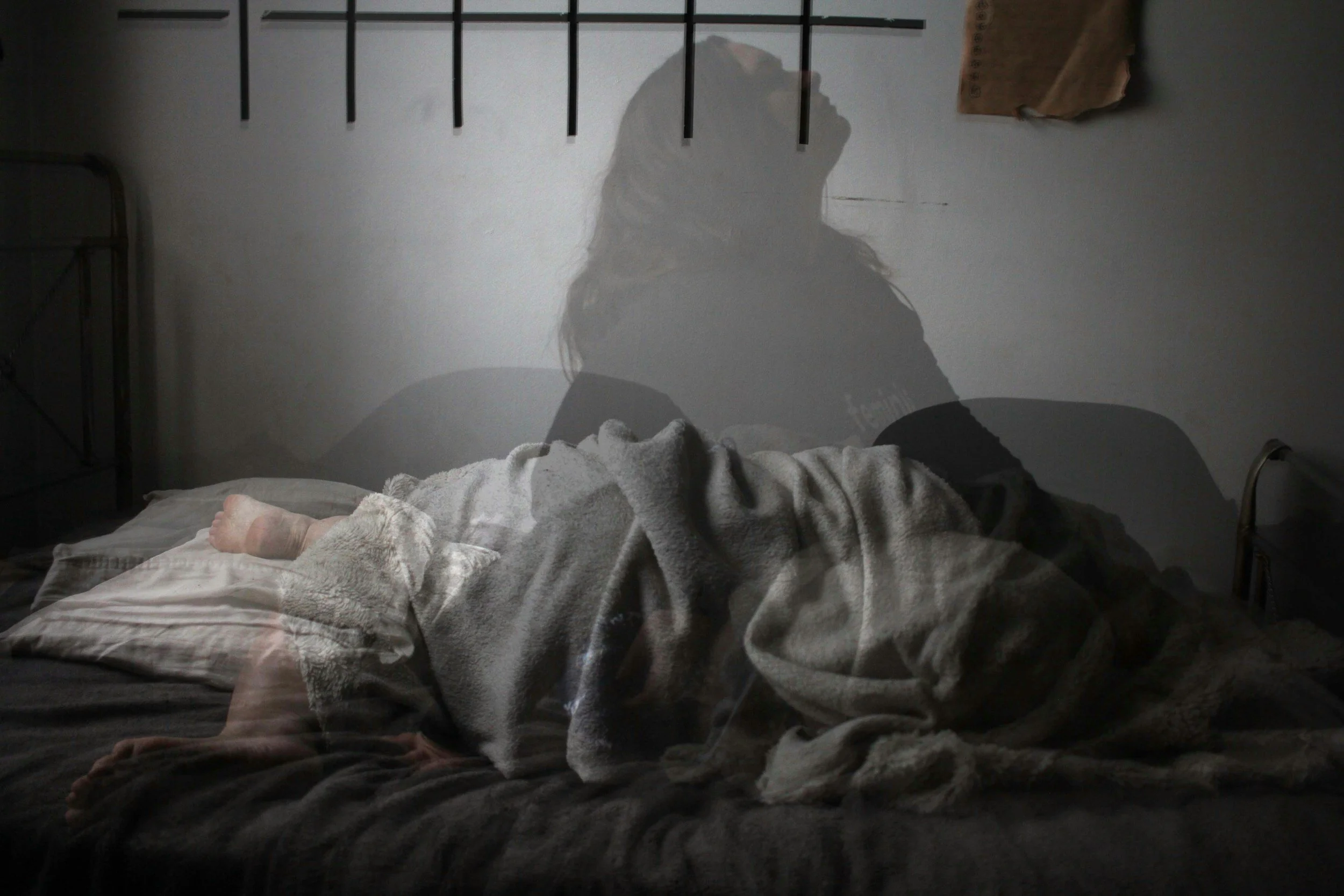
If you spend more than 30 minutes in bed trying to fall back asleep, the effort can backfire. Lying awake for hours can make anxiety worse, especially if you are trying to “force yourself to sleep.” At this time, you may feed anxious thoughts that cannot be resolved. You may also pressure yourself to fall asleep, which activates your nervous system and makes it even harder to rest.
What to Do Instead of Lying Awake with Anxiety
If you find yourself having trouble falling asleep because anxiety is setting in, here are some strategies to try instead of beating yourself up about it.
Shift from thinking to sensing
Shift your focus from racing thoughts to your senses. Paying attention to your senses helps ground you and provides an “off-ramp” from constant thought loops. Your senses include sight, sound, touch, taste, and smell, and noticing them can help bring your attention out of your head and into your body.
Here are some strategies to try:
Change your environment (touch, temperature): Adjust with a heated blanket, cool pillow, or fan.
Progressive Muscle Relaxation (PMR – touch, body awareness): PMR acts as a body scan, helping you focus on your muscles. Here is a script from Therapist Aid.
Focus on your breathing (touch, sound): Don’t try to change your breath. Simply notice the sound and sensation of your breathing in a mindful way.
Notice sounds around you (sound): Gentle ambient noise, a fan, or soft music can help anchor your attention.
These body-based and grounding techniques help regulate your nervous system. They also reassure your body that it is safe, making it easier to fall asleep and reducing nighttime anxiety.
Contain anxious thoughts instead of engaging them
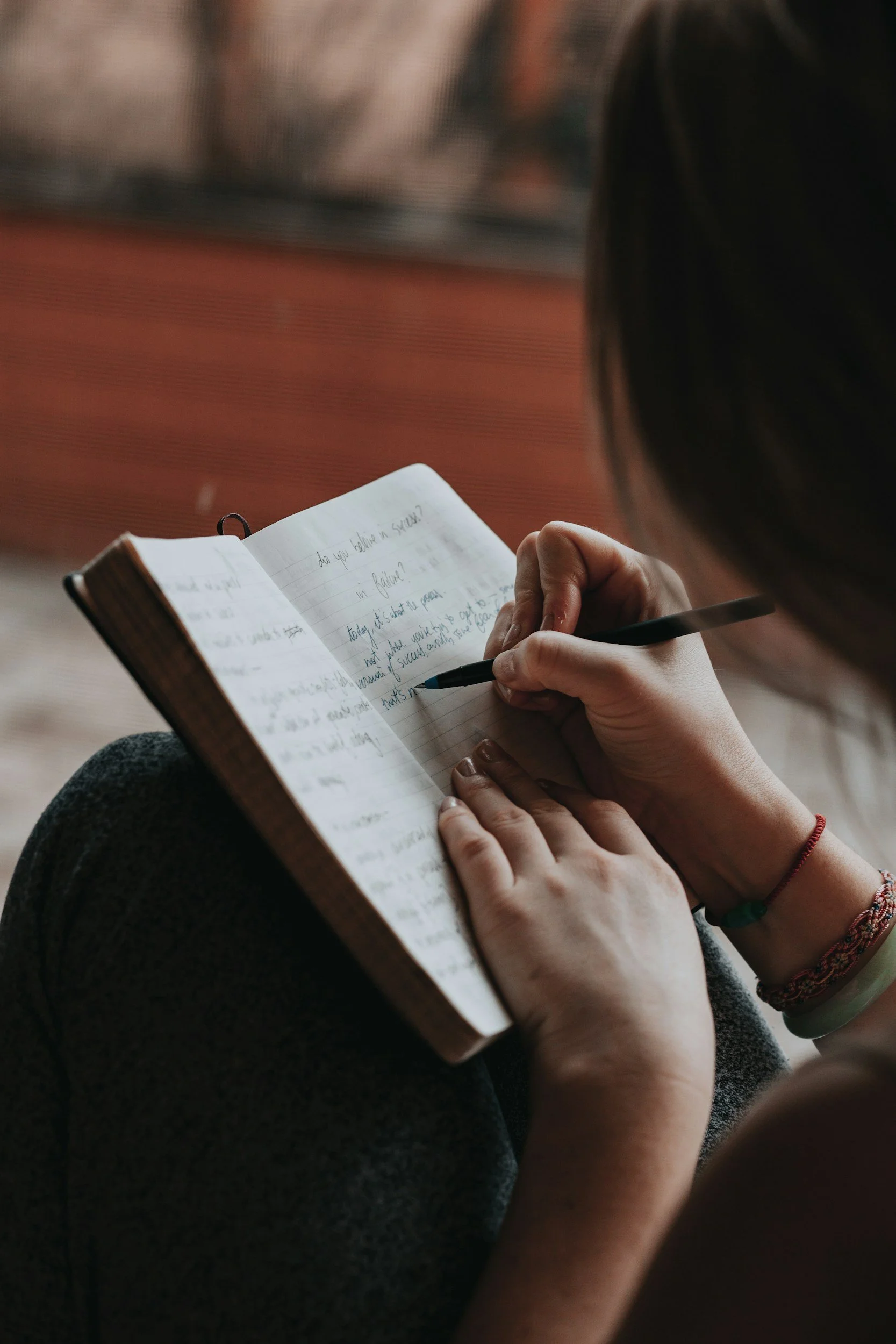
Thought-container exercises, like brain dump journaling or affirmations such as “I don’t have to solve this tonight,” can help manage nighttime anxiety. At night, our brains often try to solve everything or worry about tomorrow. Giving yourself permission to set worries aside signals your brain that these are thoughts/worries/fears that can be addressed tomorrow.
Following a thought-container exercise with a thought-stopping activity, such as listing items from A to Z in a category, gives your brain a structured task. This helps shift focus away from worry and makes it easier to relax.
Change your environment (temporarily)
If you haven’t fallen asleep after 20 to 30 minutes due to spikes in anxiety, get out of bed. Avoid pressuring yourself to fall asleep. You also don’t want your brain to associate your bed with being awake. If possible, go to another room and do a low-stimulation activity, such as reading or listening to an audiobook in dim lighting for a few minutes. This helps reduce the pressure to sleep and can make it easier to relax.
Create a consistent wind-down signal
A routine signals to your body and nervous system that it is time to prepare for sleep. It does not have to be perfect. Just one or two calming activities can work. This could include changing the music, reading a favorite book, watching a show, or enjoying a nighttime tea. These activities help your brain associate the routine with sleep, making it easier to relax and fall asleep.
When Nighttime Anxiety Might Be a Sign to Get Support

Nighttime anxiety can happen occasionally, or it can be triggered by specific situations, such as changes in living situation or a recent trauma. If you are experiencing any of the following, it may be helpful to seek support from a medical provider:
Panic attacks at night
Insomnia linked to anxiety or burnout three or more nights per week
Constant exhaustion
Support could be as simple as a conversation with your primary care provider to discuss next steps. They can help determine options based on your health profile and strategies you have already tried.
How Therapy Can Help with Nighttime Anxiety
You might talk with your primary care provider, and they could suggest therapy. Or you may realize that your sleep problems are linked to anxiety and decide to try therapy on your own. A therapist can help you spot patterns in your thoughts at night and teach ways to cope with common stressors. You can also learn skills to regulate your nervous system and understand why strategies that used to work may no longer be effective.
If Anxiety is Stealing your Sleep, Support can Help
Experiencing anxiety at night that affects your sleep can be extremely frustrating. Be kind to yourself if you are struggling with nighttime anxiety. Coping with it often requires consistency and patience. If you are looking for virtual therapy support in Michigan, complete my contact form to see if we could be a good fit to work on your nighttime anxiety together.
Resources
How to Fall Back Asleep After Waking in the Night. Jay Vera Summer & Medically Reviewed by Anis Rehman, MD. Sleep Foundation. (August 2025). https://www.sleepfoundation.org/sleep-faqs/how-to-fall-back-asleep
Progressive Muscle Relaxation Script. TherapistAid. https://www.therapistaid.com/therapy-worksheet/progressive-muscle-relaxation-script
Up in the Middle of the Night? How to Get Back to Sleep. Johns Hopkins Medicine. https://www.hopkinsmedicine.org/health/wellness-and-prevention/up-in-the-middle-of-the-night-how-to-get-back-to-sleep
